

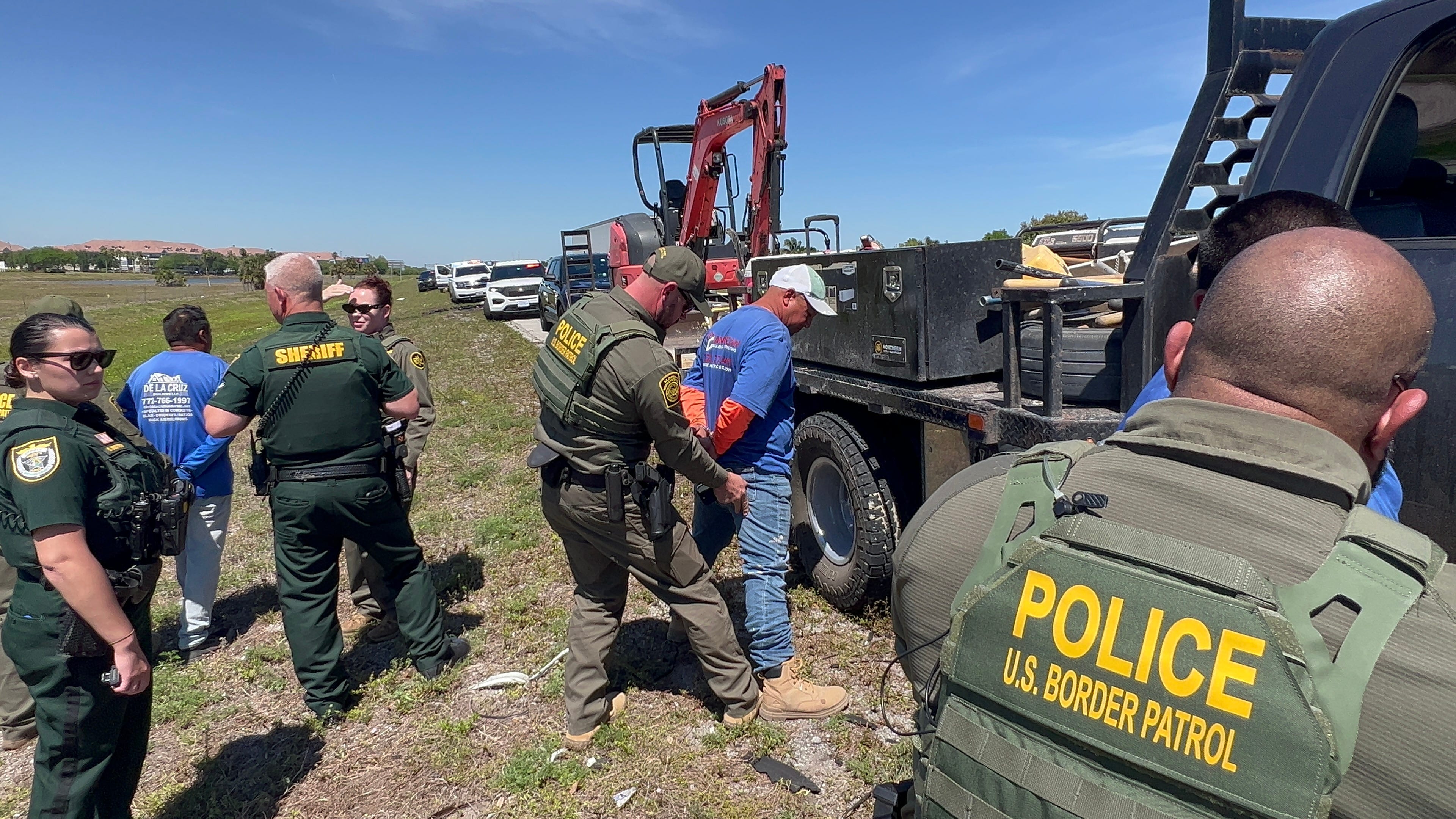
Brevard County, FL sheriff’s deputies working with U.S. Border Patrol, March 2025.
As we are well underway in President Donald Trump’s second term, his base has increasingly gotten antsy over the pace and aggressiveness for deportations. Many view carrying out one million deportations per year as the bare minimum to achieve any long lasting effect.
The Trump administration has said the federal government carried out over 600,000 deportations and around 2 million illegal aliens self-deported in 2025. Some dispute the self-deportation numbers as it is hard to say for certain how many decided to leave on their own accord if they do not tell DHS. That said, self-deportations has been a very real trend under Trump 2.0.
In my recent interview with Mike Howell, who is part of the Mass Deportation Coalition, he said he believes the Trump administration could have achieved that one million benchmark last year in spite of the many legal challenges and violence from the far-left but feels they were not aggressive enough.

While the purpose of this piece is not to excuse away any valid criticisms of how the Trump administration has been handling deportations, keyword being valid, it seems that red states also avoiding much deserved criticisms for not doing enough to help the federal government.
Naturally, states like California, Illinois, and New York are going to do everything in their power to make it as hard as possible for DHS and ICE to do their work. The easiest way for state and local law enforcement to help DHS beyond allowing access to jails is participation in the 287(g) program. The federal initiative allows local law enforcement to carry out immigration-related duties, often in conjunction with ICE or Border Patrol.
“We, states and local governments, should be proactive. Relying on the federal government is abdication of responsibility and duty to Idahoans and Americans.”
ICE reports there have been 1,637 Memorandums of Agreement for 287(g) programs covering 39 states and 2 U.S. territories as of April. It needs to be said this is a dramatic increase from the Biden-Harris administration.
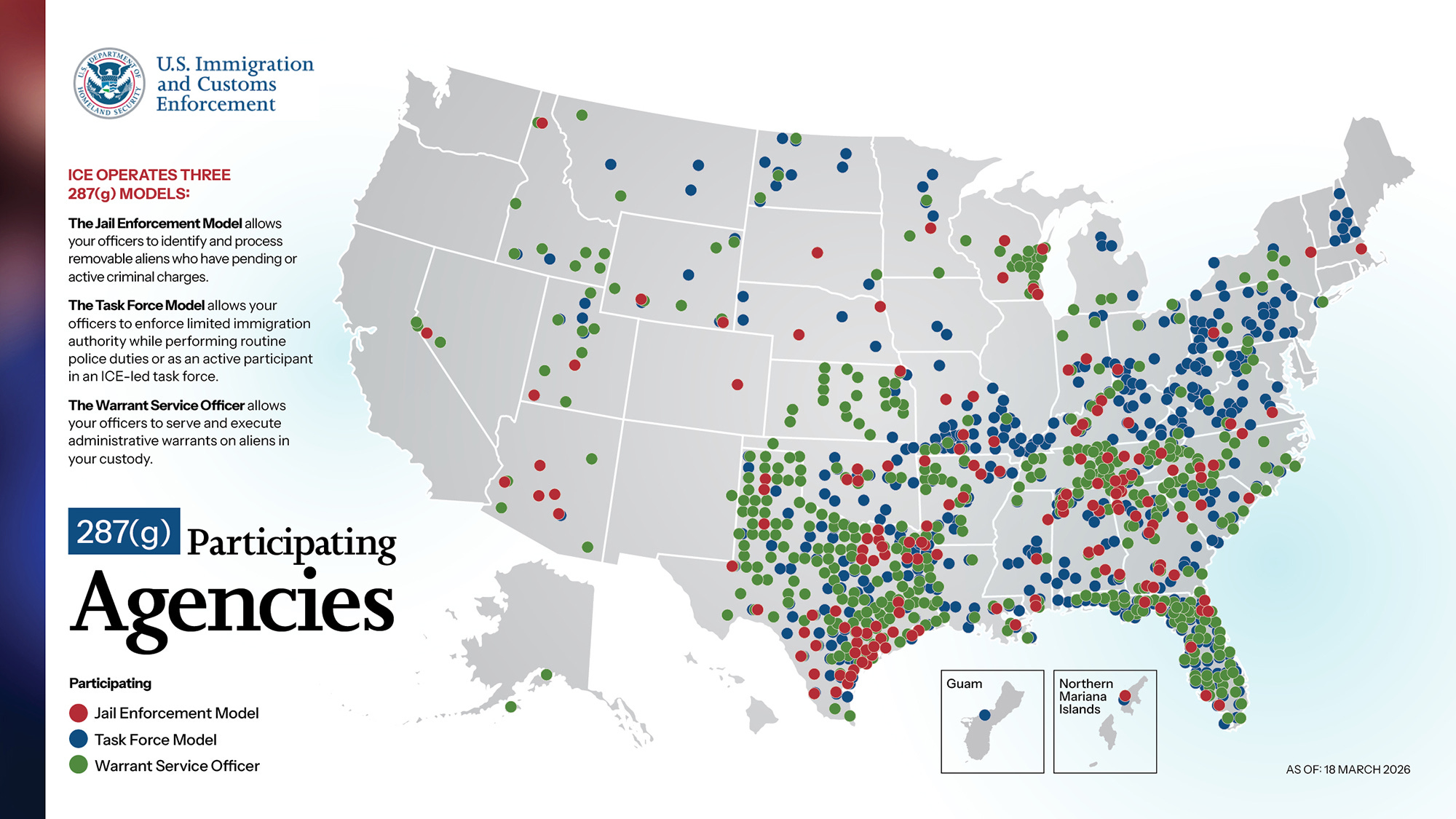
I have reported extensively on the program and have seen it in action in states like Florida. It has been required since last year for all law enforcement agencies to enroll in the 287(g) program. In that time, Florida law enforcement has arrested and turned over 20,000 illegal aliens to DHS. This is in addition to helping with capacity by operating Alligator Alcatraz in the Everglades.
With the successes Florida has seen with enhance cooperation with the federal government, not all red states have been as eager to replicate those results.
Take Idaho. A similar bill to Florida’s law that mandates 287(g) participation has been proposed and hotly debated, but unlike Florida, the idea was strongly opposed by law enforcement.
The Idaho Sheriffs’ Association, the Idaho Fraternal Order of Police, and the Idaho Chiefs of Police Association all opposed the legislation, according to the Idaho Capital Sun.
The author of the original bill in the Senate offered a watered-down version to address law enforcements’ criticisms and they still said no.
“We don’t need a law to tell us to go out and work with ICE. We’re working with ICE, and we don’t have the manpower to go out and do ICE’s job. That’s ICE’s job. So we really just want the relationship that we’ve had, and we have had for decades, where we work with ICE, we assist ICE, but they do their job and we do ours,” Payette County Sheriff Andy Creech told the Sun.
A third attempt to pass the 287(g) requirement made it beyond the House but it died in the Senate because the “procedure by which the bill was brought violated Senate rules.”
Gregg Diacogiannis, a Republican who is running for Idaho’s House District 9B, told MP.M the resistance to greater cooperation is frustrating when he sees Florida walking the walk.
“Both are seen as ruby red states, but only Florida is keep up with their reputation,” Diacogiannis, an Army veteran, said. “Governor Little is nearly silent on the biggest issue in Idaho. The Idaho Sheriffs Association has been actively lobbying against immigration enforcement at the state and local level. They send a few sheriffs to committee meetings, in uniform, to testify against any and all immigration related bills.”
Diacogiannis accused Creech of “trying to gaslight the public on what the 287(g) program is and how it works” after the sheriff got public backlash.
“We, states and local governments, should be proactive. Relying on the federal government is abdication of responsibility and duty to Idahoans and Americans,” Diacogiannis added.
Other states like Iowa saw their Department of Public Safety enter into a 287(g) agreement, but reporting at the time revealed it was only for a three-member task force. Dubuque County Sheriff Joe Kennedy, a Democrat, said last year he would not want to be required to work with ICE because of capacity and monetary concerns.
Then we have a case like Texas. The 287(g) map shows there are many agreements throughout the state and Operation Lone Star, which was started in response to the Biden-Harris border crisis, is still ongoing.
That said, there are still areas working to undermine the cooperation.