

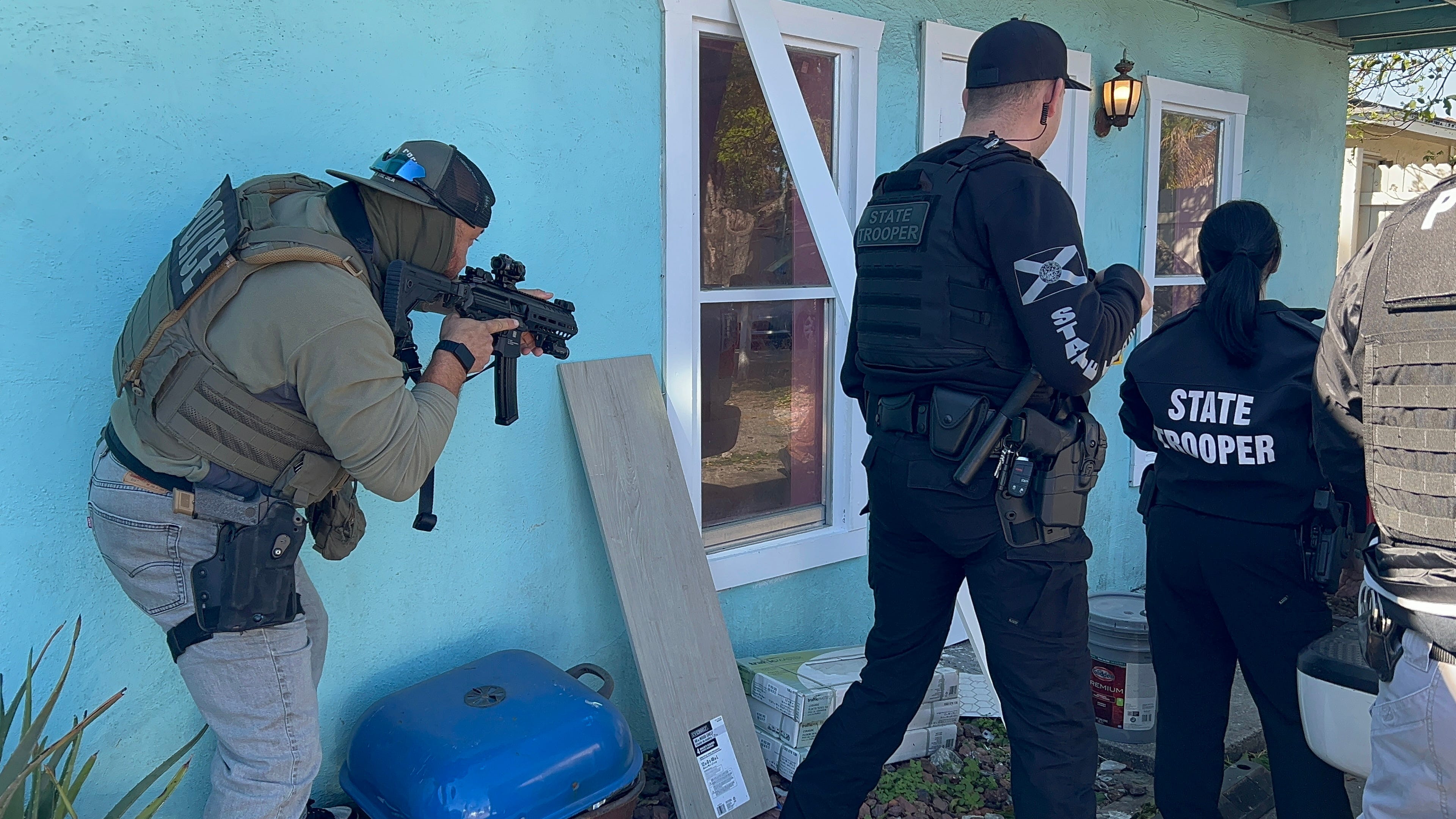
BROWARD COUNTY, Fla. — After putting on his playlist that features highway-themed songs, Florida Highway Patrol Investigator Robert Valenzuela raced to the scene of two illegal aliens who barricaded themselves in a house after fleeing a traffic stop.
In what was supposed to take 30 minutes from where we started, we made it to the scene in less than 20 minutes thanks to the flashing lights and sirens. By the time we arrived, other members of the task force, which included U.S. Immigration and Customs Enforcement, Border Patrol, and Diplomatic Security Service, were ordering the suspects to come out of the house. Fort Lauderdale police were also on standby.
Another FHP trooper told them in Spanish they had until the count of five to come out or else the door was going to be busted down. Right before ICE agents broke down the door, the two suspects came out and were quickly taken into custody.
I was embedded with FHP last week as they worked with federal immigration agents, which is possible thanks to ICE’s 287(g) program. The 287(g) agreements allow trained local law enforcement to carry out certain federal immigration-related enforcement.
By the end of the three-day operation, FHP and its federal partners made 171 arrests. Unlike sanctuary cities like Minneapolis, Chicago, or Los Angeles, the cooperation between the feds and state did not have unrest or riots in response to the operation.
WATCH:
Florida, as usual, has taken the lead and has the most 287(g) agreements in the country after Governor Ron DeSantis pushed for a bill that mandated law enforcement agencies in the state participate in the initiative. The reason was so that all localities do more than just allowing ICE access to county jails. DeSantis signed the bill into law last year.
In the time since then, Florida law enforcement have arrested more than 20,000 illegal aliens. FHP accounts for nearly 9,000 of those arrests. At the start of the week’s operation, 1,567 of them had criminal histories beyond being in the U.S. illegally.
The way it works is troopers who are accredited through 287(g) initiate traffic stops after obtaining probable cause. Reasons for stops range from speeding, improper placement of registration tags, reckless driving, or not wearing seatbelts.
If people do not run after coming to a stop (several bailouts took place during the week), it does not take long to determine the driver or passengers need to have their legal status checked. The driver often does not have a driver’s license, does not speak any English, or presents a passport from a foreign country. ICE or Border Patrol agents then check the person’s information to see if they have any pending immigration proceedings or have some form of legal status.
Arrests take place if it is determined they are in the country illegally or can have a court appearance to determine their legal status at a closer date.
At no point did I witness racial profiling. In fact, Investigator Valenzuela pulled over many vehicles for blatant reckless driving, a south Florida staple, and the drivers were U.S. citizens.
Criminal histories discovered during last week’s operation included:
MS-13 gang member with a final order of removal
Aggravated child abuse
Battery
Burglary
Possession and Conspiracy to Sell Heroin
Firearm and Drug Trafficking
Illegal Possession of a Firearm
“There are some really bad people being taken into custody,” FHP Captain Ryan Martina told me at the end of the three-day operation. “What people have to realize is bad people have jobs too. Murderers have jobs too. Murderers work in landscaping. Rapists have jobs and bad people have to drive.”
As previously stated, there was no major incident of unrest or violence from the general public. However, it does not mean there are no obstacles FHP has to deal with…