

(Use promo code MostlyPeaceful for 10% off your purchase at Ex Umbris Designs)
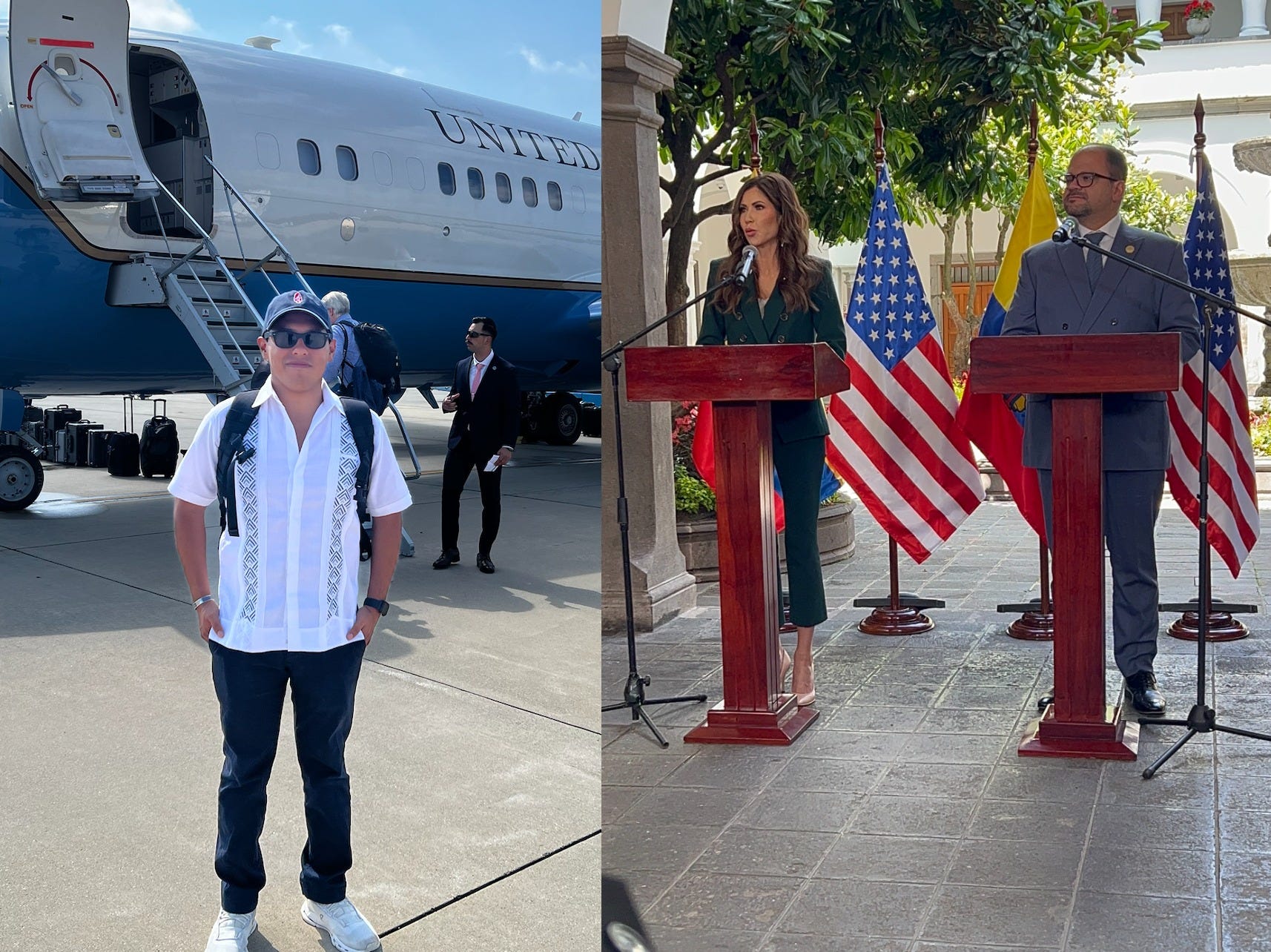
I was given the opportunity to travel with Department of Homeland Security Secretary Kristi Noem this past week to three countries in South America to see firsthand how the Trump administration is working in the region to prevent illegal immigrants from reaching the United States’ southern border.
This was my first international trip with a Cabinet member and it marked the first time I was on the South American continent. Prior to this trip, the furthest south I have been was when I traveled to Tapachula, Chipas, located on Mexico’s southern border. The reason for this trip was for Noem to sign deals and agreements in Argentina, Chile, and Ecuador to enhance cooperation so hardened criminals are caught before leaving the aforementioned countries.
Myself, a reporter from CBS News, and a photographer from the Associated Press left Joint Base Andrews on the Air Force plane carrying Noem and her staff to Argentina. Highlighting how far Buenos Aires is from the D.C. area, all of Sunday was devoted to flying south. Even ahead of schedule, we didn’t reach the hotel until 1:00 A.M. local time.
In Argentina with President Javier Milei in charge, it was perhaps the most productive leg of the trip as Noem signed three agreements with Milei’s ministers that work towards:
Argentina becoming eligible for the Visa Waiver Program
Streamlining repatriations
Fugitive enforcement to ensure fugitives are not released upon repatriations
Noem cited Argentina having the lowest visa overstay rate for all of Latin American as one reason to have the country back in the program. The nation was in the WVP decades ago but was removed in 2002 after Argentinians abused the program to stay in the United States to flee from the economic downturn. Much has changed since then with Milei’s approach to slashing government spending in order to bring down its absurdly high inflation.
The best part of the trip was enjoying a traditional Argentinian asado in the countryside as part of a cultural engagement event. The flavor and the various grilled meats were certainly worth the 12-hour flight.
Chile had perhaps the most interesting dynamic out of the three nations we visited. Its president, Gabriel Boric, is a far-leftist who has criticized President Donald Trump this year on a number of issues, namely trade.
That said, he is aware that if he wants to be president again, he needs to address public safety concerns stemming from, you guessed it, immigrants. Out of a population of nearly 20 million, one million of those are from Venezuela. Before most Americans became aware of the brutal Tren de Aragua gang, Chile and the rest of South America had been dealing with the problem for awhile.
Chile is also the only Latin American country in the VWP, which means that while they might not like the Trump administration, they have to work with us in order to remain in the program. This is why on public safety, they want help from the United States. Noem signed another letter of intent to continue Chile’s full integration into the Biometric Identification Transnational Migration Alert Program (BITMAP).
BITMAP allows better information sharing to prevent hardened criminals from entering the U.S. by creating a biometric database that law enforcement in both the U.S. and Chile can access to see if gang members or terrorists are attempting to leave South America.
The last leg of the tour was Ecuador’s capital, Quito. I was unaware how high up the city is in the mountains, nearly 10,000 feet above sea level. My sea-level residing self certainly felt the altitude change after we landed.
Ecuador is led by an administration that is friendly to the U.S., making the deals and information sharing critical as its neighbor to the north, Colombia, has a icy relationship with our country. The deal solidified there was to have an Ecuadorian police liaison at the U.S. Customs and Border Protection’s National Targeting Center to streamline data-sharing.
More than that, Noem told me Ecuador is open to have the U.S. deport Venezuelans there as part of a third-country agreement.This is significant as it could be one option to remove illegal migrants in the U.S. without having them to go back to the country they are claiming they can’t go back to.
"Those are discussions that happen when you are here that make it possible to speed up our efforts" for mass deportations, Noem explained to me.
Those discussions apparently went very well as we waited for Noem for more than an hour past the scheduled departure time from the presidential palace.
The Trump administration knows that to truly have border security, it requires more than just sealing our southern border. It means making these kinds of deals so the region stabilizes and people are less inclined to leave in the first place. It is actually addressing the “root causes” of illegal migration, something the Biden-Harris administration claimed they were doing but actually made very little head way. Nations in Latin America know they can’t take advantage of us like when Biden was in “charge.”
As always, it will be up to the U.S. to keep tabs on these agreements to ensure those countries are keeping their end of the bargain, but it is my belief this busy trip was successful.
During the trip, DHS launched their new campaign to hire agents for U.S. Immigration and Customs Enforcement. Noem told me the department already has 1,000 job offers to applicants, with some of those offers being sent to former agents who left ICE during the Biden-Harris administration out of frustration. The goal is to hire 10,000 new ICE agents to bolster its deportation efforts.
It is crazy to think that it was only a few years ago I was sweating it out on the mud-covered trails in south Texas that illegal immigrants were using to invade our country. Fast forward to today, instead of going to the border to report on problem that seemed to be unending, I was in another hemisphere to witness talks to prevent something like that from happening again.
While I didn’t have a lot of time to explore the countries we were visiting, it was cool to see the differences between each place as most of my exposure to Latin America has been going to Mexico for both work and vacation. If there is a chance to go back to either of those places, I would certainly welcome that opportunity.
Your explanation for the purpose of this trip, and then breaking down the attitude of those countries towards us, is what makes your style of reporting so attractive. I now have a solid idea of what took place and why.
Nice job Julio.