

Featured image and videography by Erik Herrera
MÉRIDA, Yucatan — The origin of guayaberas is subject to debate, but it is commonly accepted the shirt’s distinctive style originated in Cuba after field workers wanted extra pockets to help carry items. This is why the Cuban version has four pockets.
The Mexican style usually gets rid of most or all of the four pockets and incorporates a wide variety of embroidery. Both versions have vertical pleats, called “alforzas” in Spanish, and are meant to be worn untucked.
My first introduction to Mexican guayaberas was in Tapachula, Chiapas while on assignment about the long-reaching effects of the Biden-Harris border crisis in 2023. We stopped by a small store for souvenirs when a navy blue, short sleeve shirt with colorful embroidery caught my eye.
After purchasing, I left the store sporting my new shirt. It did not take long for me to look for more guayaberas upon returning to the United States. What I love about these shirts is they are made from linen or cotton and have a unique style that is not usually found in most of the United States. They can be very elaborate or more simplified, whatever the occasion calls for.
From the White House to field assignments to on-camera interviews, I have found a reason to wear guayaberas as many times as possible. You will often see the shirts being worn at weddings or formal events in hot climates. It is common for workers across Mexico to wear it as a uniform in restaurants or hotels, a nod to the reasoning for its creation.
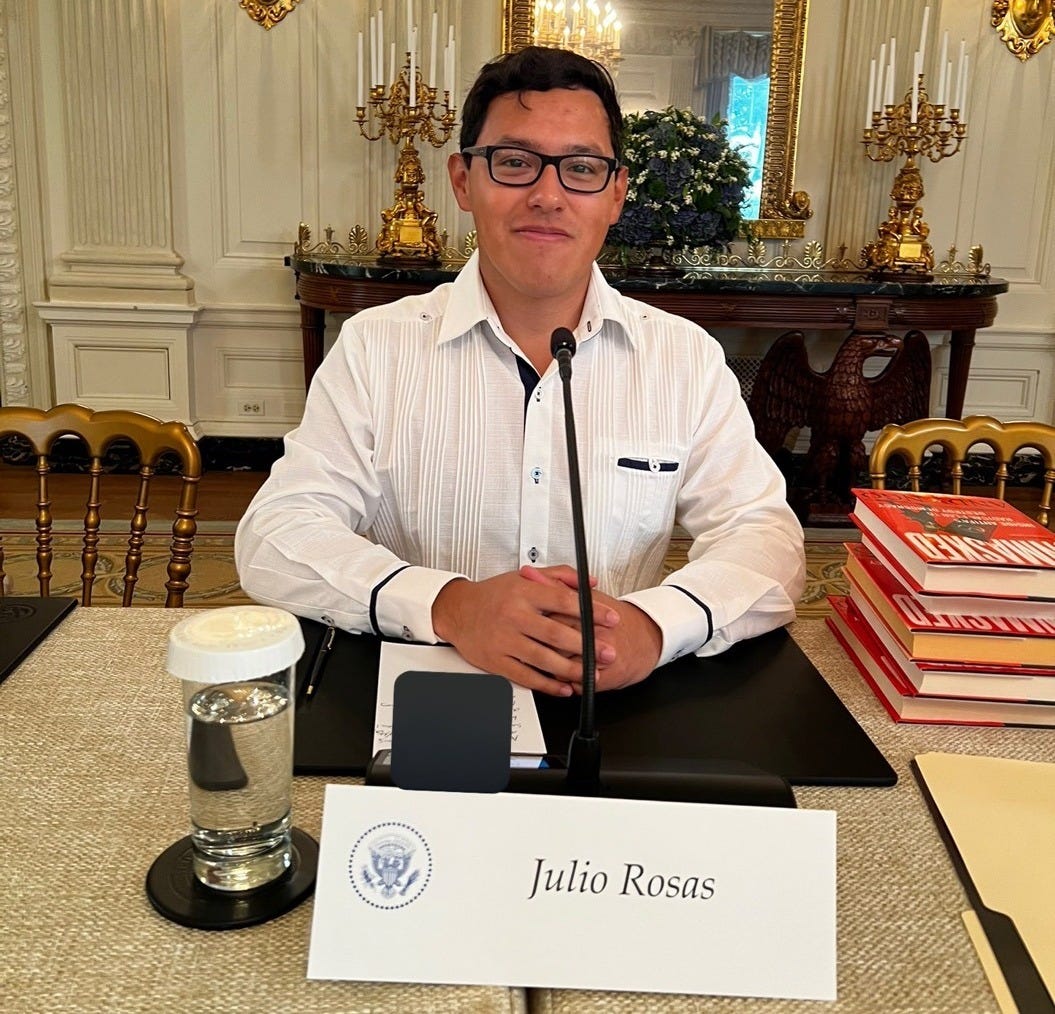
At a White House roundtable with President Donald Trump
While these shirts have seen a rise in popularity in recent years (Bad Bunny sparked interest in his fans due to wearing Puerto Rican-made guayaberas during concerts on the island) the demand has resulted in the garments being made at large-scale in Asian countries, such as China, and sold by companies like Temu and Shein. This means Mexican-based companies are not only competing against each other, but also other countries who can make more at a faster pace and sell at very cheap prices.
WATCH:
Making an authentic guayabera is no easy task. It takes an experienced worker anywhere from four hours to make a basic guayabera to three weeks for ones incorporating complex designs. A lot of time is lost if a mistake is made during production.
The state of Yucatan is considered the guayabera capital of Mexico. This means the guayabera business is a critical industry for the region. Yucatan Senator Jorge Carlos Ramírez Marín says up to 70 percent of residents in some municipalities are dedicated to making the button-down. It is here where makers and sellers are starting to raise awareness of, what they call, inferior products.
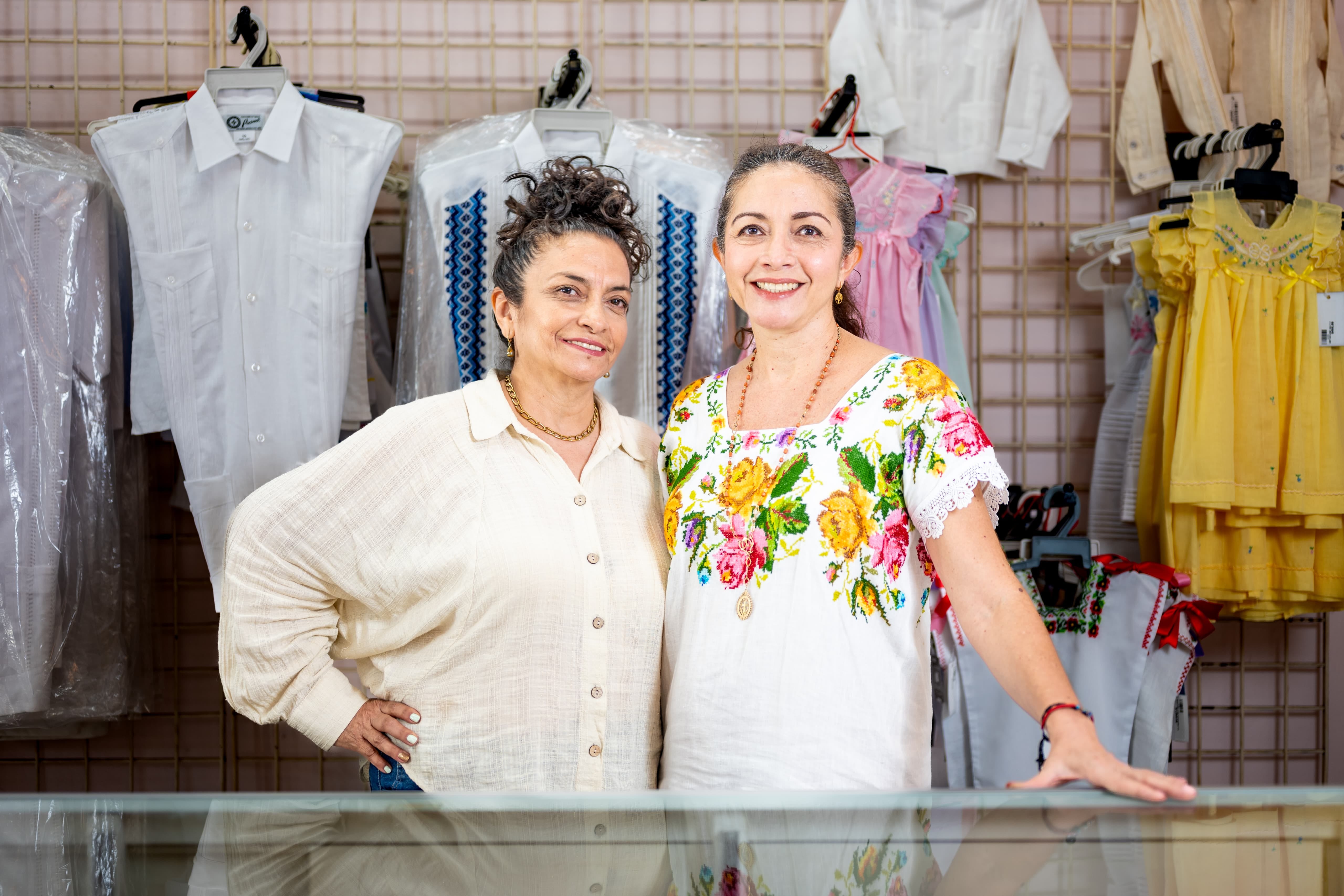
I interviewed Samuel May, of Mayakim, and the Rodriguez Avila sisters, Claudia and Cristina, who operate Guayaberas Presuel.
Samuel explained Mayakim has been in business for over 10 years and employs 16 people, “We can say there are 16 families that are supported through us.”
Presuel S.A. was started by Claudia and Cristina’s parents, originally from Veracruz, who relocated to Merida once the business took off. Presuel S.A. has been at its location near the center of Mérida for 65 years.
“There is really no comparison between the Chinese quality and our quality. So if you want or don’t appreciate the value of a quality guayabera, you can buy your Chinese guayabera. But if you want a good piece that will last many years, then you will invest in a good guayabera,” Claudia said.
“What makes this competition so difficult is the pricing they offer. I don’t really understand how they can handle prices that are so low,” Samuel said about the Asian companies’ copies.
“I believe we have been very careful since we started. It’s not about selling them at an expensive price to earn a lot, but it’s also not about selling them very cheap where we can’t earn anything,” he added.
These concerns have caused the National Chamber of the Clothing Industry (Cámara Nacional de la Industria del Vestido), CANAIVE, to start a campaign to protect Mexico’s famous shirt.
CANAIVE explained the demand creates 14,200 jobs and makes up six percent of Yucatan’s Gross Domestic Product. The trade organization wants to have Mexican guayaberas have an internationally recognized certification so people can distinguish what is authentic and what is a copy.
Guayabera sellers are betting their higher quality products will win over customers, who are more conscientious of where their clothing comes from. It is a matter of getting the word out, especially to the large market within the United States.
Foreign copies of other Mexican-made products have caused outrage and quick government action. When Adidas announced the “Oaxaca Slip-On” last year, based on the huarache sandal, the state of Oaxaca and President Claudia Sheinbaum accused the company of cultural appropriation and violating “collective intellectual property.” Adidas and the designer, who is half Mexican, issued an apology and pledged to work with Oaxacan artisans.
This is the part I admit to owning a couple of these non-Mexican made shirts for field assignments where the risk of getting extremely dirty or heavily damage is high. This is so if it becomes unwearable from field conditions, I can go online and easily replace it.
Not so with my Mexican guayaberas. I have too much respect for them and replacements would require another trip back in most cases. They are too nice for riots!
Cristina said tourists are slowly becoming more aware of imitations and do their research before visiting the city: “There are many people from the United States who have bought from us, and they come by recommendation…There have been times I was asked, ‘They’re not Chinese?' and I say, ‘No.’”
“What makes guayaberas special? They use [them] for weddings, for baptisms, for communion,” Samuel said. “It is what it is. It’s elegant and formal.”
The passion Mexicans have for making guayaberas the correct way is evident. It is that same passion that will be needed to ensure this art form is maintained for future generations.
WATCH THE FULL INTERVIEWS: